
"This Word Also Means"
On illegitimate totality transfer & the limits of language

It’s Ash Wednesday. Today’s post has nothing to do with that. If you’d like to read some thoughtful reflections on the season of lent you might check out this compelling piece on Lent as permission or this delightful introduction to Lent complete with a downloadable guide and great book recs! Each is written by a friend and fellow substacker, I love the overlap of real-life and internet-writing-life on this platform. Anyways, on to some exciting semantics.
“Did you know that the greek word used here can also mean”
That’s a phrase I’m willing to bet most church-going folks have heard a time or two before. It’s one I’ve overused myself. Often this phrase is followed by a linguistic crime known as an “illegitimate totality transfer.” An illegitimate totality transfer takes place when someone infers that because a certain word can mean a,b, or c, those various meanings condition our understanding of that word in its present context.
Here’s an example. The greek word used for “know” in Luke 8:10a “To you it has been granted to know the mysteries of the kingdom of God” can also mean “sexual intercourse between a man and a woman.” Thus, Jesus is telling us that we are given such intimate knowledge of the mysteries of the kingdom of God that we copulate with them.
Most times the interpretive errors aren’t necessarily dangerous, they’re just dumb. Often, it’s appealing because it makes a nice rhetorical point or seems to expand our understanding of a text. However, we should be careful to play around with meaning for the sake of the message. This instagram video from Pete Enns provides a helpful example and explanation of the fallacy.
The term originates in The Semantics of Biblical Language by James Barr in which he critiques Gerhard Kittel and his ubiquitous Theological Dictionary of the New Testament. Barr wrote, “The error that arises when the 'meaning' of a word (understood as the total series of relations in which it is used in the literature) is read into a particular case as its sense and implication there, may be called 'illegitimate totality transfer'.” Barr puts “meaning” in quotes because the “series of relations in which it is used,” or the various meanings a word can have don’t determine the meaning a particular word does have. The range of meaning assigned to the word “flesh” (sarx) in the New Testament is an example of that fact. It’s also an example of how ITT can be misused in damaging ways, reinforcing negative ideas of the body simply because Paul uses the word at times to describe something more than skin.
What strikes me about all this is how obvious an error it would be if we were doing the same thing with english words. For example, if we read the sentence “John flagged the email from an unknown sender as spam” we could google the word spam and find that it also refers to a kind of spiced ham. Perhaps, then, John was indicating that the email was enjoyable to him when he is hungry. Of course not. Context determines meaning for the reader.
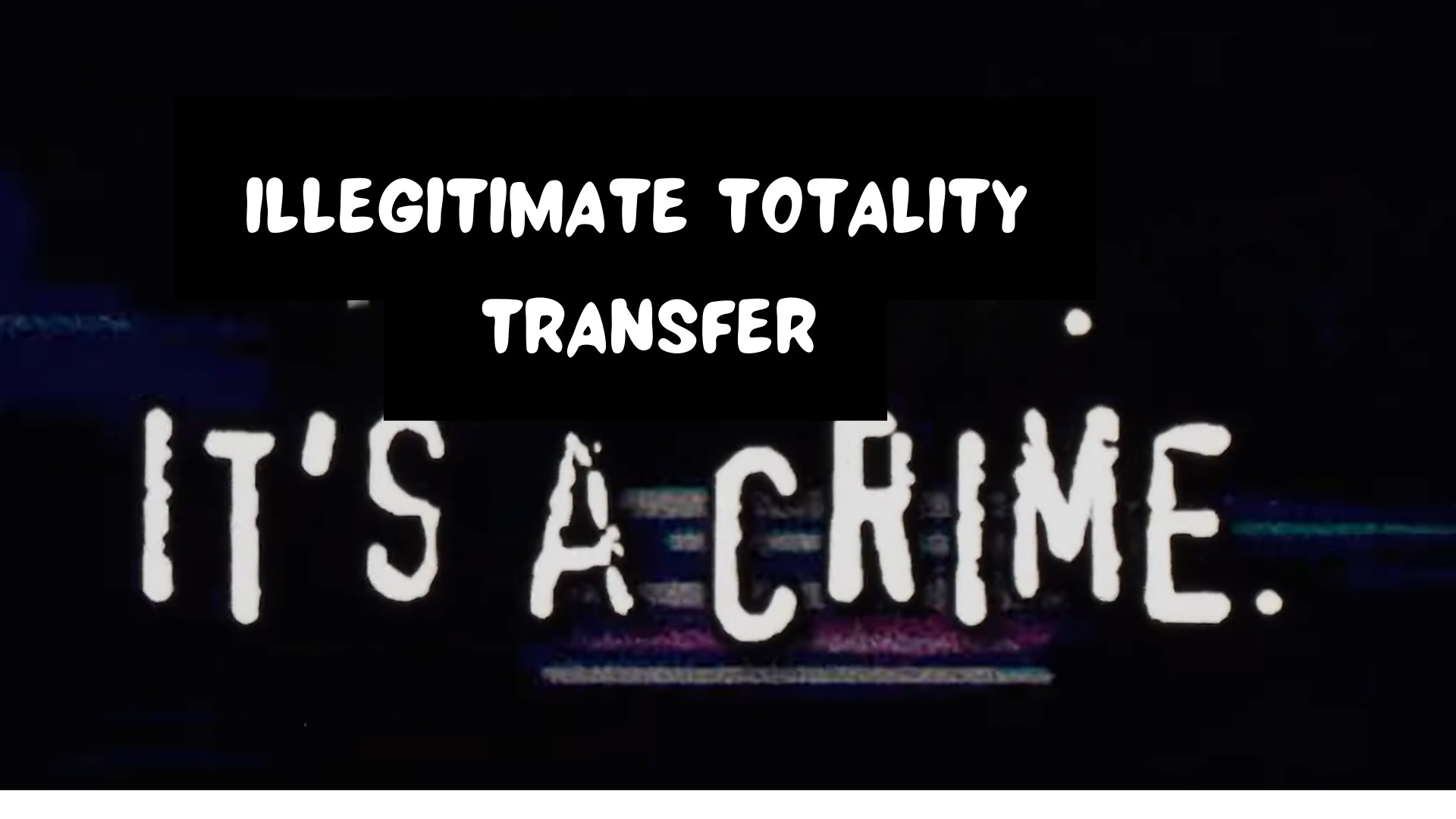
This reminds me of that old anti-piracy ad that used to play before movies, “you wouldn’t steal a car” it ran, or a handbag, dvd, etc. next the screen flashes in rapid seuqence “downloading pirated films is stealing.” The final screen then reads, in a super cool early 2000s font, “Piracy. It’s a crime.”
How about an alternative ad for biblical studies. We could run them before every Josh Howerton instagram clip “you wouldn’t illegitimately transfer the meaning of spam from a sandwich to an email.” Next, we see a middle-aged man in a trucker hat at his computer, presumably editing the sermon ChatGPT just wrote for him, and we see he’s typing into a search bar: “what does sarx mean,” then, in an equally cool font the screen flashes, “Illegitimate Totality Transfer. It’s a crime.”
I enjoyed this. I lack a lot (read:virtually all) of the formal vocabulary to describe it, but since I started paying more attention to Christian youtube content, short form videos in particular, it's amazing how much of this stuff is out there.
My favorite example of ITT is the idea that being "meek" in the beatitudes means being capable of fighting but choosing not to. I think about that every time I see a video of Wes Huff swinging a Katana.
One way to think of this is to realize the Bible translators have already done the careful work of choosing the best meaning. That’s the whole point of translating.